Table Of Content
- The GM-backed company is one of the first to launch Level 4 vehicles in a dense, complex urban setting
- GM's Cruise to relaunch vehicles with human drivers in Phoenix
- Cruise ‘just days away’ from approval to mass-produce Origin robotaxis without steering wheels
- The Cruise Safety Report: Advancing our safety mission through a transparent and holistic approach
- Incidents
- Safety

Ford has said it will build an autonomous car without a steering wheel or pedals by 2021, while Waymo has begun offering a limited number of rides in fully driverless minivans to its customers in Phoenix, Arizona. GM-backed Cruise is “just days away” from regulatory approval to begin mass production of its fully autonomous vehicle without a steering wheel or pedals, the company’s CEO, Kyle Vogt, said at an investor conference Thursday. Cruise was approved to test fully driverless cars (also called Level 4 in industry parlance) in California on October 15th.
The GM-backed company is one of the first to launch Level 4 vehicles in a dense, complex urban setting
The unit has quickly gone from one of GM's greatest business opportunities to a growing liability. Cruise, of which GM owns more than 80%, has confronted a wave of problems and investigations sparked by an Oct. 2 accident in which a pedestrian in San Francisco was dragged 20 feet by a Cruise self-driving vehicle after the person was struck by another vehicle. "Hence, I do not think that this advances in any way GM Cruise’s timetable to market and I see no reason to update my estimate for autonomous driving becoming a commercial reality." Cruise said the Origin was a "production vehicle" designed for shared transportation, but stopped short of releasing details on availability or pricing. A big part of Cruise’s strategy moving forward, as outlined in Tuesday’s blog post, involves reforming and establishing updated incident response and crisis management protocols to ensure more efficient and transparent responses in the future.
GM's Cruise to relaunch vehicles with human drivers in Phoenix
Robotaxi Cruise vehicles are making a return — but they won’t be autonomous - The Hill
Robotaxi Cruise vehicles are making a return — but they won’t be autonomous.
Posted: Thu, 11 Apr 2024 07:00:00 GMT [source]
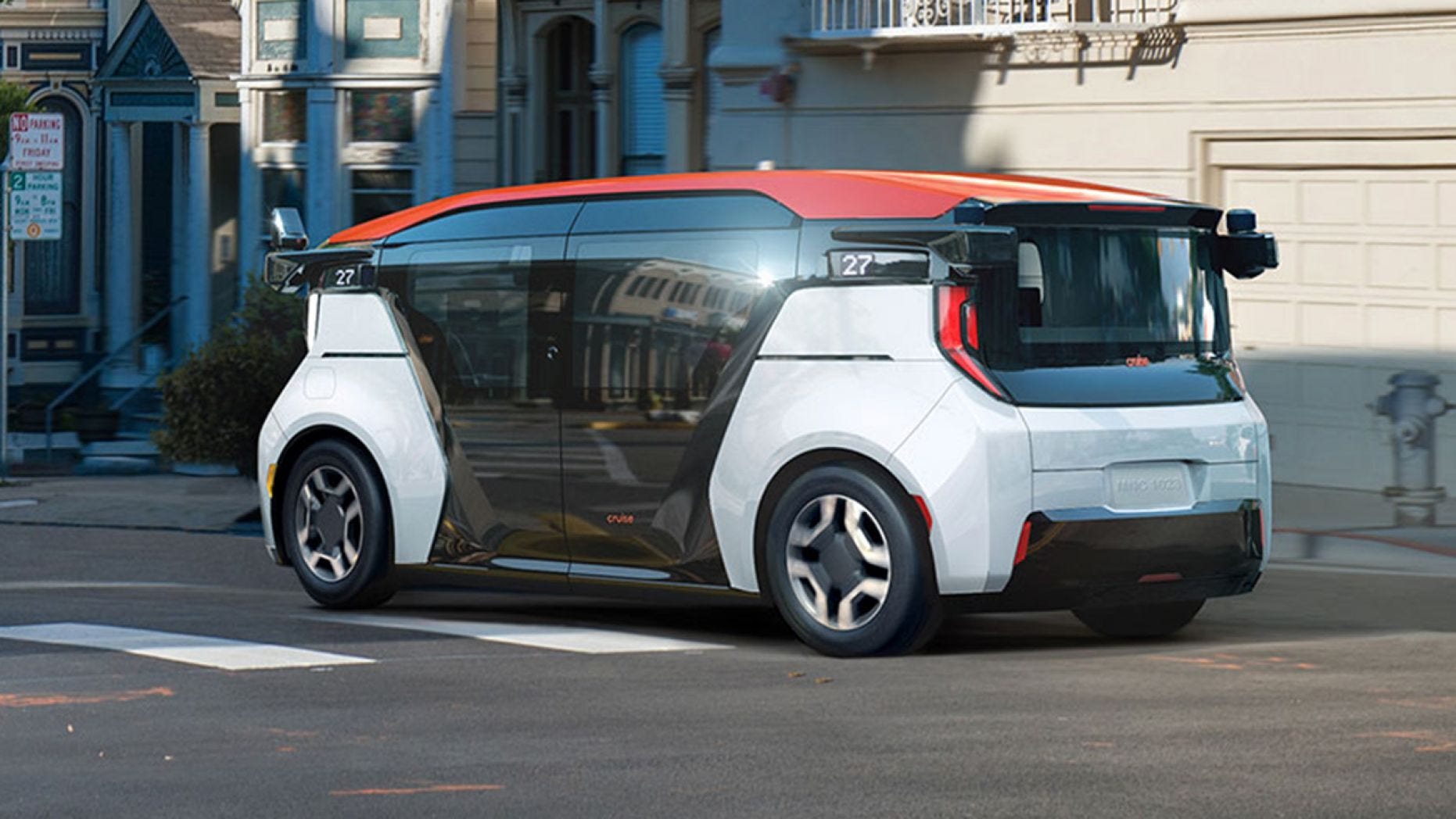
In other words, WorldGen becomes the stage where the future simulations are set. Cruise just gained approval in California to perform commercial delivery services, and is still one permit away from being able to charge for driverless ride-hailing. Still, Cruise thinks it’ll be able to drive down costs enough to scale up and out quickly. Inside are two bench seats facing each other, a pair of screens on either end... The absence of all the stuff you expect to see when climbing into a vehicle is jarring.
Cruise ‘just days away’ from approval to mass-produce Origin robotaxis without steering wheels
We believe AVs will save lives and significantly reduce the number and severity of accidents on America’s and Arizona’s roads every year. AVs will also improve lives - including creating convenient and safe transportation options for the elderly and those with disabilities. As we begin this journey, we look forward to partnering with local communities to jointly achieve our shared mission of making transportation safer for all. Our goal is to earn trust and build partnerships with the communities such that, ultimately, we resume fully driverless operations in collaboration with a city.
Cruise Self-Driving Cars Struggled to Recognize Children - The Intercept
Cruise Self-Driving Cars Struggled to Recognize Children.
Posted: Mon, 06 Nov 2023 08:00:00 GMT [source]
No steering wheel, no pedals, no gear shift, no cockpit to speak of, no obvious way for a human to take control should anything go wrong. To make streets safer, he said in an interview, cities should embrace self-driving cars like those designed by Cruise, a subsidiary of General Motors. They do not get distracted, drowsy or drunk, he said, and being programmed to put safety first meant they could substantially reduce car-related fatalities. Earlier this year, the company signed an agreement with Dubai's roads and transport authority to be the exclusive provider for self-driving taxis and ride-hailing services through 2029, which would assist in the ramp-up.
Driving cities forward
Ammann said Cruise expects to begin charging customers for rides as early as next year, pending a final permit from California. DETROIT – Cruise, General Motors' majority-owned autonomous vehicle subsidiary, is targeting a fleet of at least 1 million self-driving vehicles by 2030. Cruise is certainly one of the best capitalized autonomous vehicle companies in the world. In 2018, it secured both a $2.25 billion investment from the SoftBank Vision Fund and a $2 billion investment from Honda. In 2019, Cruise landed a $1.15 billion investment from GM, SoftBank, Honda, and T.
By Andrew J. Hawkins, transportation editor with 10+ years of experience who covers EVs, public transportation, and aviation. Cruise was expected to launch a ride-hailing service for the public in San Francisco in 2019. GM says it remains bullish on its software initiatives and investments in joint ventures for EVs — for example, an investment projected to exceed $1 billion with POSCO Future M to increase production capacity of key battery elements in North America. Jacobson said the change in Brightdrop was to reduce redundancies and cut costs, as business cases have changed. BrightDrop was expected to generate $1 billion in revenue this year; it's unclear where that stands.
Carpooling in the age of smartphones hasn’t exactly been the runaway success that ride-hailing companies like Uber and Lyft have hoped. Cruise has been working on the design of the Origin for over three years, but Honda’s involvement “super charged” the effort. The two automakers didn’t collaborate on every tiny detail; instead, they split up the work based on their expertise. GM was responsible for the base vehicle design and the electric powertrain, while Honda helped create the interior’s “efficient use of space,” Vogt says.
Safety
Cruise cars tell their wheels and other controls how to move along the selected path and react to changes in it. The result is a ride that’s safe, efficient, and natural-looking to other drivers. Commercializing autonomous vehicles has been far more challenging than many predicted even a few years ago. Since becoming part of General Motors in March 2016,[17] Cruise has been working on developing software and hardware to make fully autonomous vehicles using modified Chevrolet Bolts. But there's growing concern across the industry, not just with GM and Cruise, about the viability of autonomous vehicles, or AVs, as a business instead of as a niche science project.
The vehicle is "our answer to the question about what transportation system you'd build, if you could start from scratch," said chief executive Dan Ammann in unveiling the electric-powered Cruise Origin late Tuesday. The DMV and others have accused Cruise of not initially sharing all video footage of the accident, but the robotaxi operator pushed back – saying it disclosed the full video to state and federal officials. “We still have a long way to go to generalise this, to make this work at massive scale everywhere. But the relative difficulty of that compared to doing the work that is already behind us is pretty small.
Despite all that, GM appears to believe it can eventually move forward with Cruise. GM CEO Mary Barra said Dec. 4 during an Automotive Press Association meeting in Detroit that the automaker is "very focused on righting the ship" at Cruise. GM, like other companies, has quickly shifted from attempting to impress Wall Street with growth initiatives, including generating $80 billion in new businesses by 2030, to refocusing efforts on core business to generate profits amid economic and recessionary concerns. A third-party probe into the October incident and subsequent fallout, which was ordered by GM and Cruise, found culture issues, ineptitude and poor leadership were at the center of regulatory oversights that led to the accident. The probe also investigated allegations of a coverup by Cruise leadership, but did not find any evidence to support those claims. During the height of the COVID-19 restrictions, Cruise repurposed its AV fleet to deliver meals to vulnerable people in the San Francisco area, alongside partnering with Walmart on a self-driving delivery pilot in Arizona.
Each engineer or product lead who spoke Thursday presented various components, from how it uses simulations and the development of its own chips and other hardware to the design of its app and the vehicle itself. I don’t typically hear AV companies talk about “unit economics” and profitability. Experts estimate that each self-driving car could cost upward of $300,000-$400,000, when taking into account the expensive sensors and computing software needed to allow the vehicles to drive themselves. Recouping those costs will be enormously challenging, and Cruise is trying to address that by building a car with more staying power than most personally owned vehicles. Vogt also said the novelty of the technology is why the media covers Cruise’s vehicles differently than they do with human-driven cars. “We’re at a unique moment in time, where anything an AV does, even if it is awkward or something interesting or ...


No comments:
Post a Comment